
Music is more than just entertainment—it can be a powerful tool for the ADHD brain! Whether it's listening to a favourite playlist, singing along in the car, dancing around the living room, or learning to play an instrument, music has the ability to influence how our brains function, process emotions, and connect with the world around us.
But what actually happens in the brain when we listen to music?
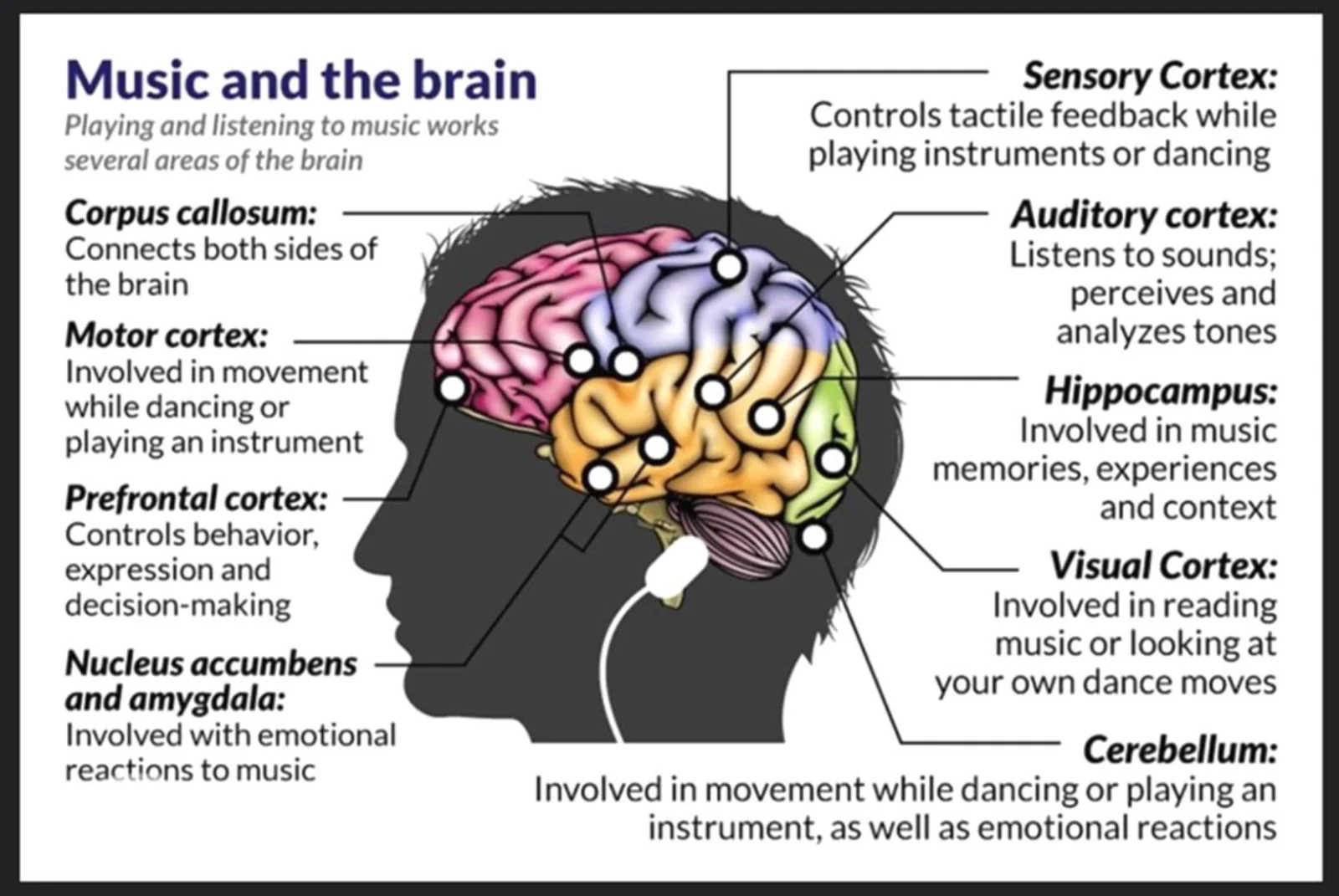
Music activates multiple areas of the brain, including those responsible for movement, memory, attention, emotional processing, and decision-making. One particularly interesting area is the nucleus accumbens, which plays an important role in motivation, reward, and pleasure. Research discussed by clinical psychologist Dr. Roberto Olivardia highlights how music stimulates dopamine activity in this area. As well, when this area is activated, it reduces pain, so when we listen to music, it feels like it’s ‘hit the spot’ and can provide a soothing response in the brain and body.
So, how can we bring this into everyday life?
Music doesn't have to mean sitting down and listening to a playlist. Different musical activities can support different skills:
- Dancing can support motor coordination, timing, mood, and confidence.
- Singing can encourage emotional expression, breathing, grounding, and body awareness.
- Playing an instrument can provide opportunities to practise concentration, coordination, repetition, and attention.
- Songwriting can support emotional expression, vocabulary, and putting feelings into words.
- Listening to music can be a helpful tool for mood regulation, motivation, and creating routines.
The most important thing to remember is that music is not a one-size-fits-all strategy. Some individuals with ADHD find background music helpful when completing tasks, while others concentrate better in silence. Finding what works for each individual is key.
Music can be a wonderful addition to an ADHD support toolbox. It offers opportunities to connect, express emotions, build skills, and experience joy—all while engaging multiple areas of the brain.
TIP 1: Create playlists for different activities or moods. Easy to access when you need to feel your feelings or help motivate your brain to start OR complete a task!
TIP 2: Create a playlist for the length of time it takes to complete a task so it helps support the encouragement of completing a task (ie. showering or cleaning), and also creates a sense of time (how long something takes), when time is blind.
So, the next time you reach for your headphones, turn up a favourite song, or find yourself dancing around the kitchen, remember that music may be doing more than filling the silence. It may be helping your brain find its rhythm!
Ready to take a step?
Free 15-minute consult. Therapy for ages 4–29 across Ontario.